

With the rise of AI search, user behavior has changed. We’re no longer just typing a main topic or keyword into a search box. Often, we type out full questions, which can be very long and specific. To stay visible in modern search, content needs to be optimized for natural language prompts and LLM-style questions, not just keywords.
In this guide, you’ll learn how to find LLM-friendly questions for any main keyword or search query. You’ll also get a complete checklist for implementing a conversational SEO process.
Why Do AI Search Questions Matter in SEO?
LLM models such as ChatGPT, Claude, and Perplexity seek content that answers the way a human expert would. Optimizing only for keywords (main and long-tail) still works, but it’s often incomplete. Now we need to understand the questions and prompts behind the keywords, because that’s what people are often typing. And more importantly, that’s what LLMs are trained to recognize and reward.
For example, if a person is searching for “SEO tool, “Google will show popular SEO Tools by category: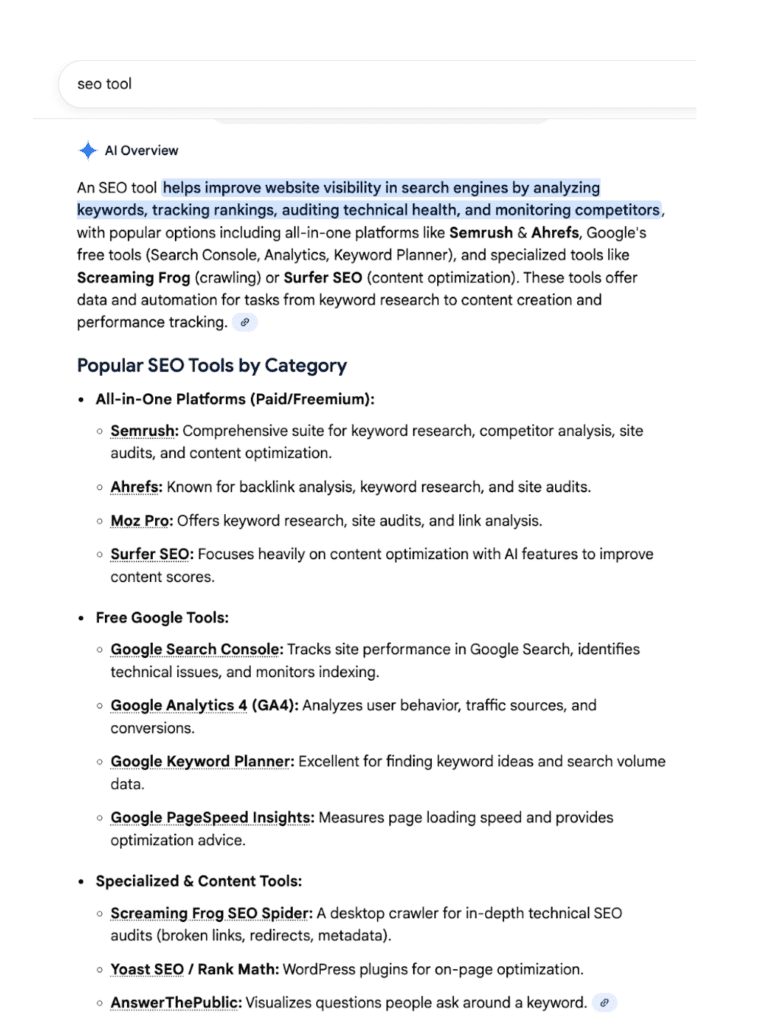
But when someone asks, “What’s the best SEO tool for a technical audit?” The result will be more tailored to the person’s needs: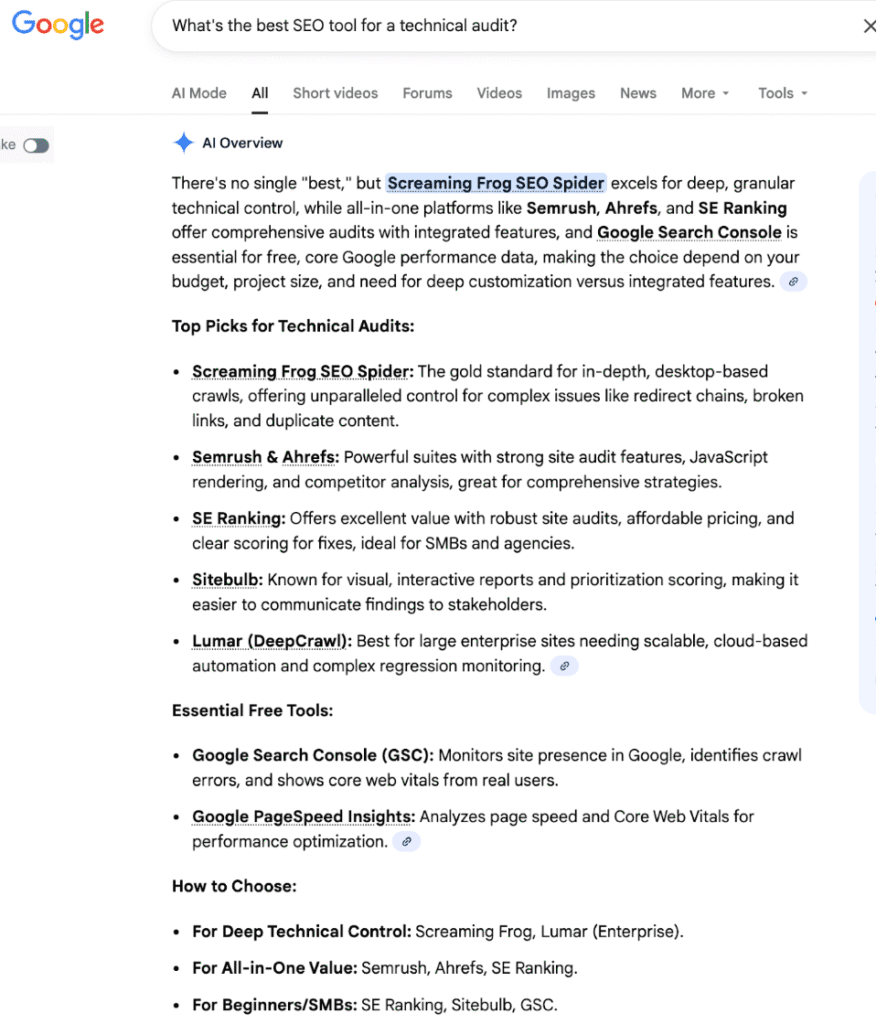 LLMs pick up on that. They understand the meanings of “best” and “technical audit.” If your content doesn’t address those nuances, you won’t get cited, or you won’t show up in AI Overviews. What can help your content (or parts and chunks of it) be visible in AI searches is adding LLM-friendly questions to your content and answering them (and this is what conversational SEO is).
Key Stats About This Topic
- Conversational search is growing. Google reports that search queries are becoming longer and more conversational, with AI Overviews favoring full-sentence, question-style searches over short keywords. AI Overviews now appear for 15-24% of queries, especially complex questions and long-tail terms averaging 5+ words.
- Large language models and AI search systems now heavily influence user questions and results. Recent academic research shows distinct patterns in generative AI query responses compared to traditional search, with LLMs favoring contextual, multi-turn conversations and probabilistic modeling for accuracy.
How to Find AI Search Questions for Any Keyword in 2026
To master conversational SEO, first identify the natural-language questions and queries users actually type into AI tools and search engines. Here are the five most effective techniques for uncovering these LLM-friendly questions.
1. Use the Google Search Console
If you have an existing indexed content page with impressions, you go to your Performance tab in GSC. Look at your queries. Look for any queries that are phrased as questions, such as those beginning with:
- “how,”
- “what,”
- “why,”
- “which,”
- “can,” or
- “should.”
This method shows you the real questions people are already typing in search results that lead them to your site. These are your starting points.

Google Search Console: Questions filtered by “How”
This method can only be used for existing content pages that have some visibility in search. From my personal experience It works only once you actually rank a bit and start to make impressions in GSC for a specific topic.
2. Use AlsoAsked and AnswerThePublic Tools, and Search for People Also Ask Questions
If you add an entirely new page to your website and don’t have GSC data yet for it, tools like alsoasked.com or answerthepublic.com are more helpful. 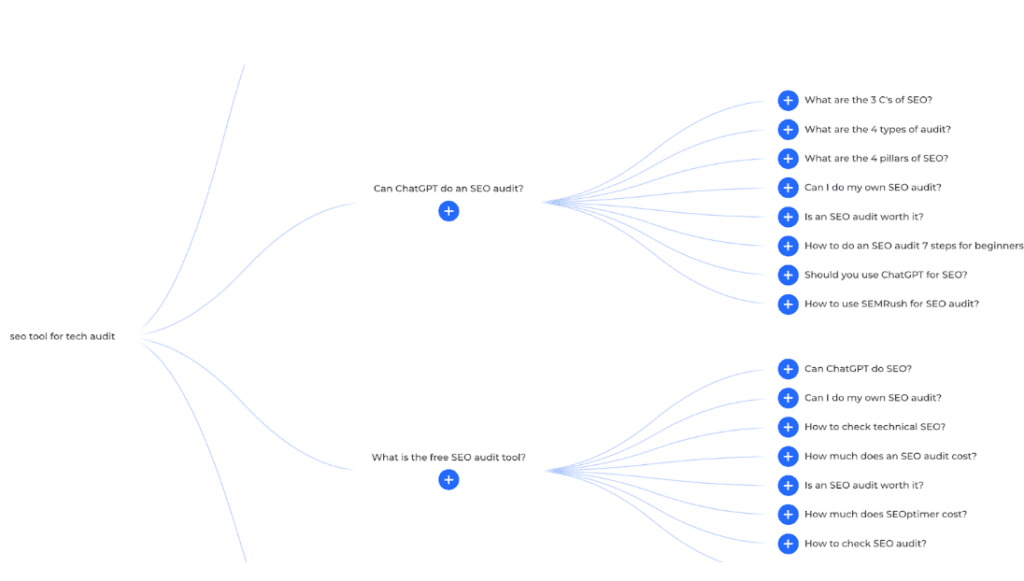
You can also just manually pull Google’s “People Also Ask” questions. Type in your keyword, and you’ll see related questions to your topic.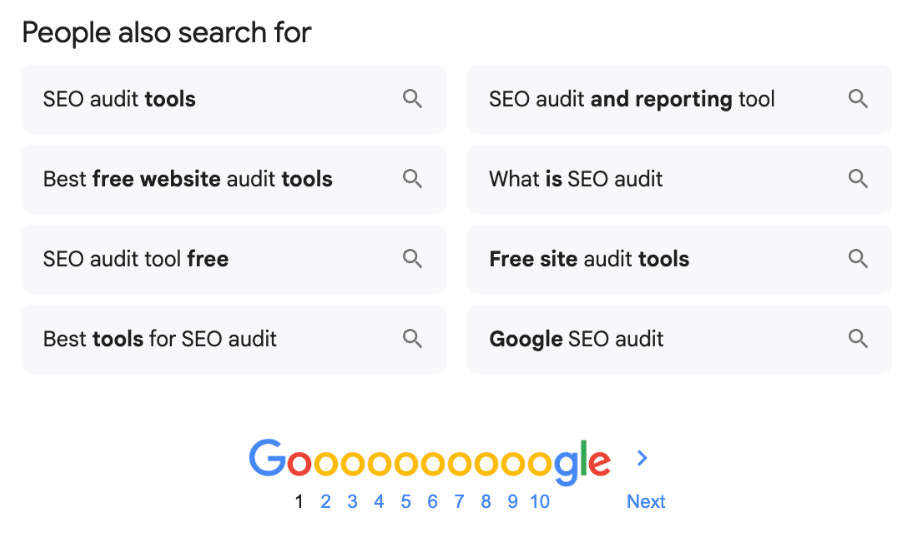
3. Ask ChatGPT or Claude Directly
Ask an LLM what questions users would ask about your keyword.
Try this prompt:
“What questions would users ask about [your keyword]?”
Or:
“Give me 10 natural-sounding questions about [topic].”
The responses mirror how LLMs think about your topic. You’re literally seeing what these systems expect to answer. Use that intelligence.
4. Search in the Reddit Threads + YouTube Comments
- Reddit: Search site:reddit.com [your keyword] and browse threads. Look for recurring questions, frustrations, or confusion. These are unfiltered, real user questions.
- YouTube comments: Go to videos related to your topic. Read the comments. People ask follow-ups, challenge ideas, or admit what they don’t understand. That’s your content map.
5. Use the Ahrefs Questions Report
This technique is probably the most popular method. You can find the Ahrefs questions in their keyword research sections.
Here’s how:
- Enter your main keyword
- Go to the keyword overview or keyword ideas section
- Filter by “Questions”
You’ll get a ranked list of actual questions people are searching, complete with volume and difficulty data.
LLM Content Optimization: How to Structure Questions and Answers for AI Visibility
LLM models love clarity and structure. They pull from content that’s well-organized, concise, authoritative, and direct. Here’s how to format your questions and your answers:
- Use H2 headers as questions: Ensure the question itself serves as the header. This signals to both Google and LLMs that you’re directly addressing a query.
- Answer immediately: Don’t start with fluff or an introduction to the topic. Lead with a summary, then expand. If your question is, for example, “What is an SEO tool?” Your answers should start with “An SEO too is … Additionally, be very specific in your answers. You can refer to the niche and provide examples if necessary.
- Use FAQ Sections: FAQ sections are prime targets for featured snippets, Google AI Overviews, and LLM citations due to their structured Q&A format. Keep answers direct and concise (40-60 words, 2-3 sentences max) to match how AI extracts responses. Always implement FAQPage schema markup to boost machine readability and rich result eligibility.
- Implement Schema Markup: Structured data makes your content easier for machines to parse and recommend. Use:
-Article schema for blog posts
– How-To schema for step-by-step guides
-Product schema for product pages - Include references and sources: LLMs increasingly favor content that references credible sources. When making claims, link to original studies, reference authoritative sources, and add data visualizations when relevant.
If you want to dive deeper in this topic, I wrote a very detailed guide on my blog on how to optimize content for generative AI. You can read it here.
Your Complete Conversational SEO Checklist
Use this checklist to implement prompt SEO on your site:
Research Phase
- [ ] Pull question queries from Google Search Console
- [ ] Use AlsoAsked.com to map related questions
- [ ] Use AnswerThePublic to discover question variations
- [ ] Ask ChatGPT: “What questions would users ask about [keyword]?”
- [ ] Check Reddit threads using site:reddit.com [keyword]
- [ ] Read YouTube comments on popular videos in your niche
- [ ] Use Ahrefs Questions filter to get search volume data
- [ ] Compile all questions into a spreadsheet organized by topic cluster
Content Optimization Phase
- [ ] Structure content with H2 questions as headers
- [ ] Write immediate, concise answers (no fluff)
- [ ] Add specific examples relevant to your niche
- [ ] Include a dedicated FAQ section
- [ ] Implement schema markup (FAQ, Article, How-To)
- [ ] Add citations to credible, authoritative sources
- [ ] Include publication dates on time-sensitive content
- [ ] Make content scannable with clear formatting
Monitoring Phase
- [ ] Track brand mentions in ChatGPT, Perplexity, and Claude
- [ ] Monitor AI Overview appearances in Google Search Console
- [ ] Use tools like Semrush AI Visibility
- [ ] Measure citation frequency and sentiment
- [ ] Test priority prompts monthly across different LLMs
- [ ] Update content based on changing user questions
Final Thought
Keyword research and optimization remain essential, but layering in question optimization is now critical to match evolving user search habits. AI search engines and LLMs prioritize content that directly answers natural-language queries. Hunt down those natural questions, structure your content around them with tight H2s and FAQs, and watch LLMs start citing you.